
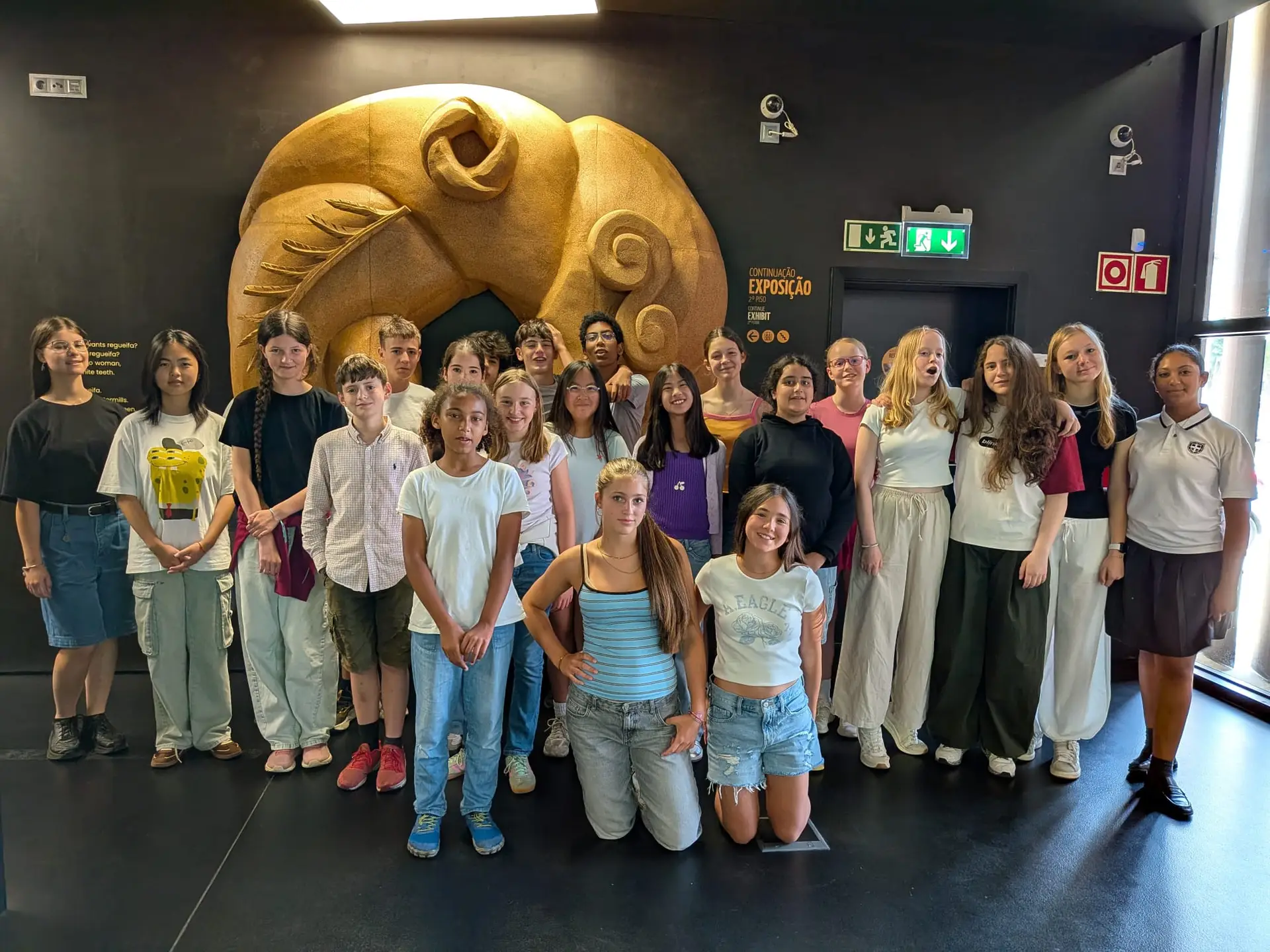
We started out on a short bus ride which my friend Lyra and I spent talking and laughing. When we arrived, we went to a park to let the people at the biscuit museum prepare for us. When we entered, we watched a film about this girl going through the history of how the “Terra do pão” came to be. Then, we explored the museum with a tour guide and she talked about how different bread and biscuits came to be, like the Regueifa. Then we went to bake the biscuits: We made four different types of cinnamon biscuits. One swirly cookie, one treble clef cookie, one croissant cookie, and one with unique numbers for each person. My mom said they looked like little turds. We also went to a biscuit shop where you can buy a lot of different types of biscuits. We each bought big bags of Partidos, which is one kilogram of broken biscuits for 4.50 euros. After that, we went for lunch and ate some of the biscuits. They were very yummy and we had a lot of fun on the playground, especially the big swing. After eating lunch, we went to a lousa museum. We found that back in the day, people used lousa for everything, for walls, blackboards, lights and various tools.
Audrey and Lyra
——
A visita de estudo foi muito interessante. Fomos à Oficina da Regueifa e do Biscoito, um museu onde conhecemos a história dos biscoitos e do pão de Valongo. Vimos um pequeno documentário sobre uma rapariga que viajava através das diferentes épocas, descobrindo como teve início a tradição do pão. Observámos as máquinas utilizadas na produção do pão, que tinham uma história muito fascinante por detrás delas. Também vimos os diferentes cereais usados para fazer esse pão e os biscoitos. Após a visita guiada, fomos ao centro de confeção do museu, onde fizemos biscoitos tradicionais com várias formas. No final, pudemos prová-los e estavam deliciosos!
Depois disso, tivemos uma hora de almoço num parque junto a um parque infantil, enquanto esperávamos pela visita ao museu seguinte. Comemos alguns biscoitos que tínhamos comprado numa padaria perto do museu.
Quando entrámos no autocarro, fizemos uma curta viagem até ao outro museu, onde aprendemos sobre a lousa. A lousa transformou as ferramentas e a mineração, bem como a arte e o ensino. Era utilizada em candeeiros, quadros, desenhos e escrita, ferramentas de mineração, panelas, e também era cortada em placas mais finas para ser empilhada e utilizada na construção de paredes de habitações. Após a visita, participámos numa atividade em que aplicámos tinta sobre gravuras feitas na lousa e estampámos essas gravuras em folhas de papel, deixando imagens impressas na sua superfície.
A viagem de regresso foi agradável e conversei bastante com amigos e alunos dos anos mais novos. Foi muito interessante falar com eles, e aprendi mais do que apenas sobre os museus e a história da lousa e dos biscoitos.
La-Salette e Joana
——
Na minha opinião, a melhor parte da nossa visita de estudo era cozinhar, porque aplicámos aquilo que aprendemos em ações saborosas!
Dina
——
I thought the Portuguese study’s trip was very good. I like when we made our own cookies in the workshop and I liked the little movie they showed us.
Amelia
——
The Portuguese Studies trip to Valongo, Portugal was overall an amazing experience. From making biscuits to visiting the slate museum, it was a fun and memorable experience that I enjoyed. We learnt the history of Valongo and it was interesting. Although the bus broke down, it was still an important part of the school year. I would recommend visiting Valongo to visitors that are interested in historic areas in Portugal.
Venus
—–
I enjoyed the trip to Oficina da Regueifa e do Biscoito and loved exploring Valongo. My favourite part was making and eating the crunchy and flavourful caramel biscuits, and I liked the bus ride where I could chat and relax with my friends. It was a fun experience but I didn’t like it when we were waiting for a new bus because ours broke down.
Lara